Offshore piling noise recorded with catenary-based floating AMAR
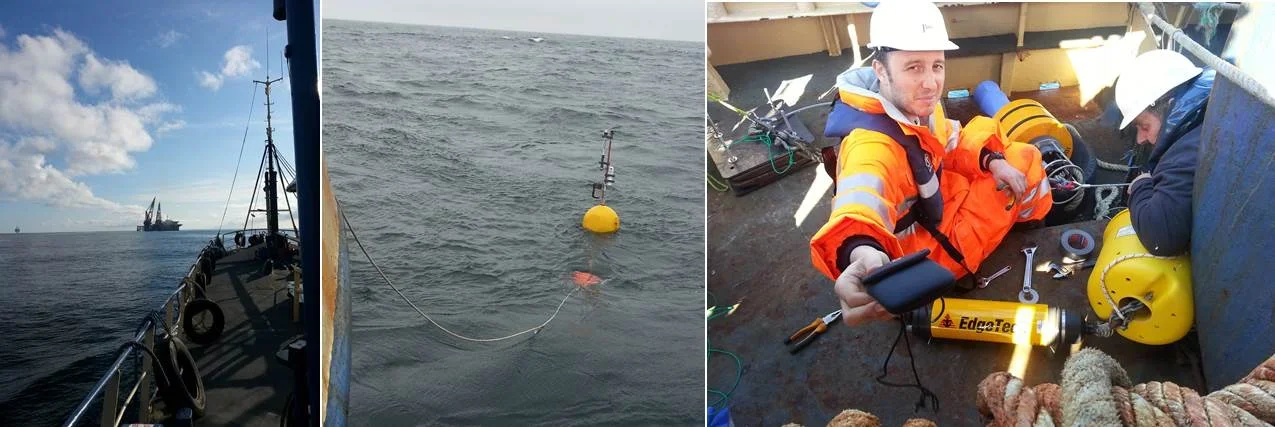
JASCO completed a complex, offshore piling noise recording program for BP, west of Shetland. Sound from piling activity to install a large platform jacket was recorded at a number of static and mobile recording locations using a series of JASCO’s AMAR G3s (Autonomous Multichannel Acoustic Recorders). Static, seabed moorings and a revolutionary catenary-based floating AMAR were used to gather wideband acoustic data from the installation process. The data were analyzed to provide empirical levels of sound and rates of propagation loss from the site along various bathymetric profiles.
About JASCO Applied Sciences
JASCO Applied Sciences is a world leader in the science of underwater sound and its effects on marine life. A global company founded in Victoria, Canada, in 1981, JASCO provides services from offices in Canada, the United States, the United Kingdom, Germany, and Australia. We provide support for all stages of environmental reviews and assessments of underwater sound for the renewable energy, oil and gas, marine construction, shipping, and defence sectors. We design, develop, and manufacture state-of-the-art oceanographic data acquisition systems to meet project demands for quality, endurance, reliability, and performance. We enable our clients to satisfy regulatory requirements by providing scientifically defensible assessments of their projects to government regulators and the public. For more information, visit: www.jasco.com.