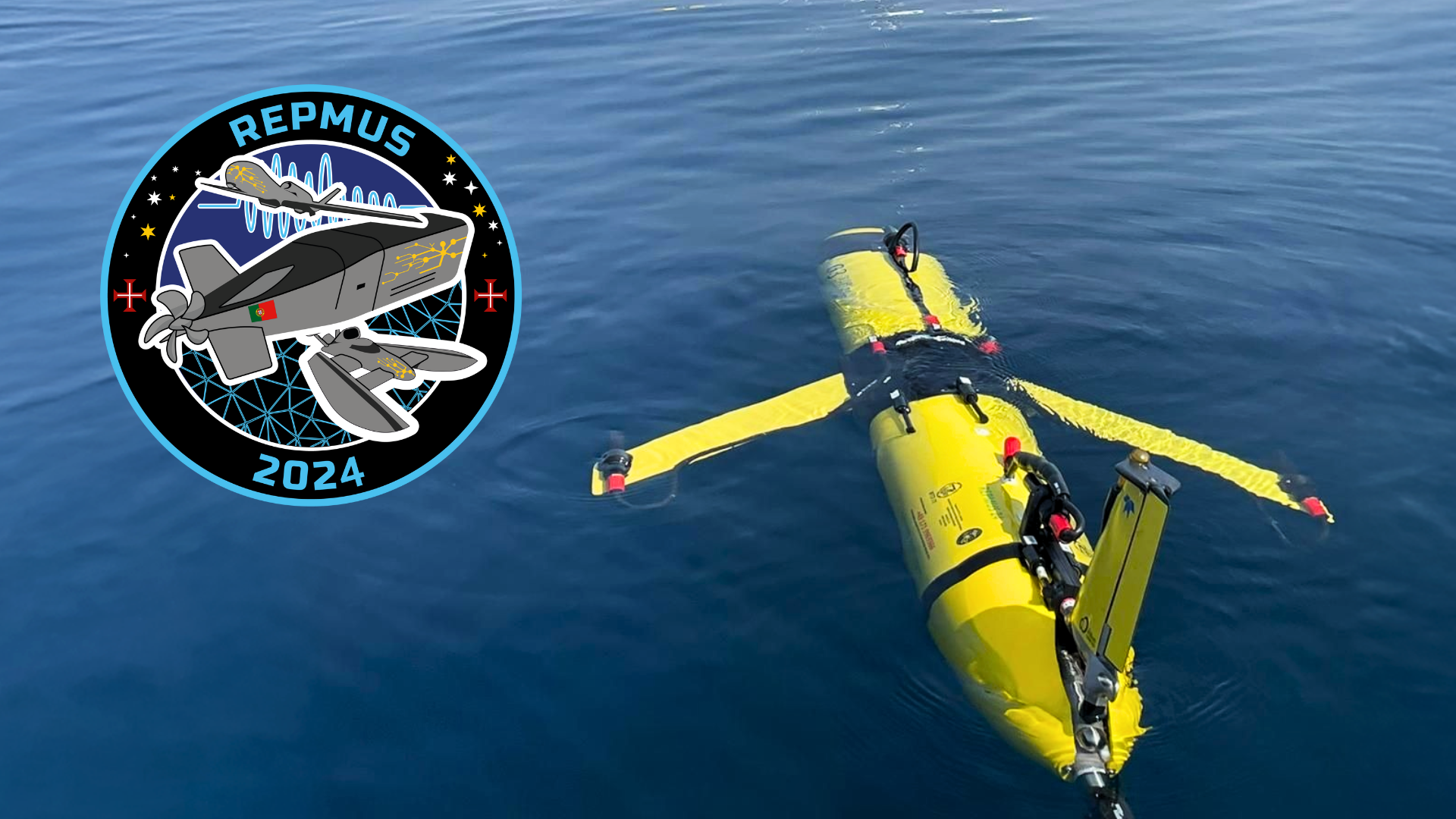
JASCO Applied Sciences (JASCO), Blue Ocean Marine Tech Systems (BOMTS), Teledyne Marine (Teledyne) and WTD71 collaborated to experiment and demonstrate novel passive acoustic real-time monitoring capabilities from marine unmanned systems during the 14th edition of REPMUS.
The Robotic Experimentation and Prototyping using Maritime Unmanned Systems (REPMUS), is an annual military exercise organized by the Portuguese Navy with the participation of military forces, universities, tech companies and industry. The objectives of the exercise are to demonstrate the current and potential technological and operational capabilities of NATO and various allied and partner nations. It also provides testing and development opportunities for different types of unmanned aerial vehicles (UAV), unmanned surface vehicles (USV), unmanned underwater vehicles (UUV), and unmanned ground vehicles (UGV).
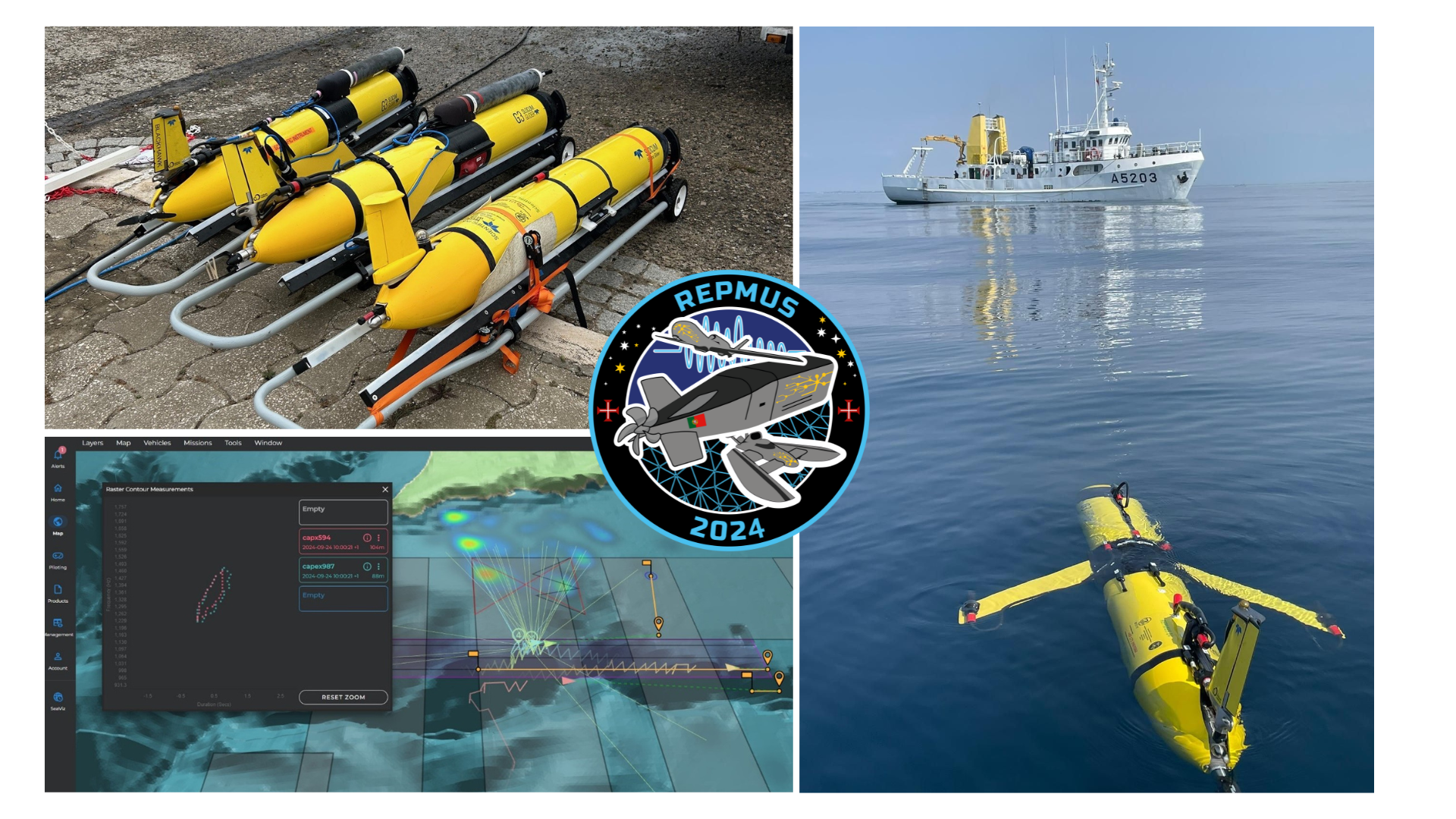
The team successfully demonstrated how Teledyne Webb’s Slocum™ underwater gliders can provide Under-Water Warfare (UWW) and Anti-Submarine Warfare (ASW) combatants early warning & indicating, and persistent maritime surveillance. Three Slocum™ gliders fitted with JASCO Applied Sciences’ OceanObserver™ were able to detect and localize acoustic targets as part of the Anti-Submarine Warfare (ASW) Barrier testing at REPMUS. The gliders also provided in-situ ambient noise and environmental data measurements for Rapid Environmental Assessment (REA) to enable sonar performance prediction and own ship vulnerability assessment.
UWW and REA users were provided an intuitive geo-spatial visualization via Blue Ocean Marine Tech Systems SeaSuite™, displaying glider tracks, bathymetry, collected data, target detections, bearing estimates, and heatmaps of localizations. Position and contact data were seamlessly transferred to the Exercise Commander using NATO’s CATL protocol.
JASCO Applied Sciences extends its sincere gratitude to our sponsor, the Royal Navy, as well as our collaborators at Teledyne Webb Research, Blue Ocean Marine Tech Systems, WTD71, and the target providers. Special thanks to the leaders and members of the UWW/ASW and REA teams, and the NATO Maritime GEOMETOC, for their outstanding support during REPMUS 24. We also wish to express our deep appreciation for the hosts—the Marinha Portuguesa, the Faculty of Engineering at the University of Porto, the NATO Centre for Maritime Research and Experimentation, the NATO Joint Capability Group on Maritime Unmanned Systems, and the European Defence Agency — for giving us the opportunity to participate in the exercise.
Near-real-time directional detections of North Atlantic Right, Fin, and Sei Whales are shown above.
About JASCO Applied Sciences
JASCO Applied Sciences is a world leader in the science of underwater sound and its effects on marine life. A global company founded in Victoria, Canada, in 1981, JASCO provides services from offices in Canada, the United States, the United Kingdom, the Netherlands, Germany, and Australia. We provide support for all stages of environmental reviews and assessments of underwater sound for the renewable energy, oil and gas, marine construction, shipping, and defence sectors. We design, develop, and manufacture state-of-the-art oceanographic data acquisition systems to meet project demands for quality, endurance, reliability, and performance. We enable our clients to satisfy regulatory requirements by providing scientifically defensible assessments of their projects to government regulators and the public. For more information, visit: www.jasco.com.