A fleet of Slocum gliders equipped with OceanObserver™ systems successfully demonstrated the ability to detect and localize marine mammals off the Coast of Nova Scotia
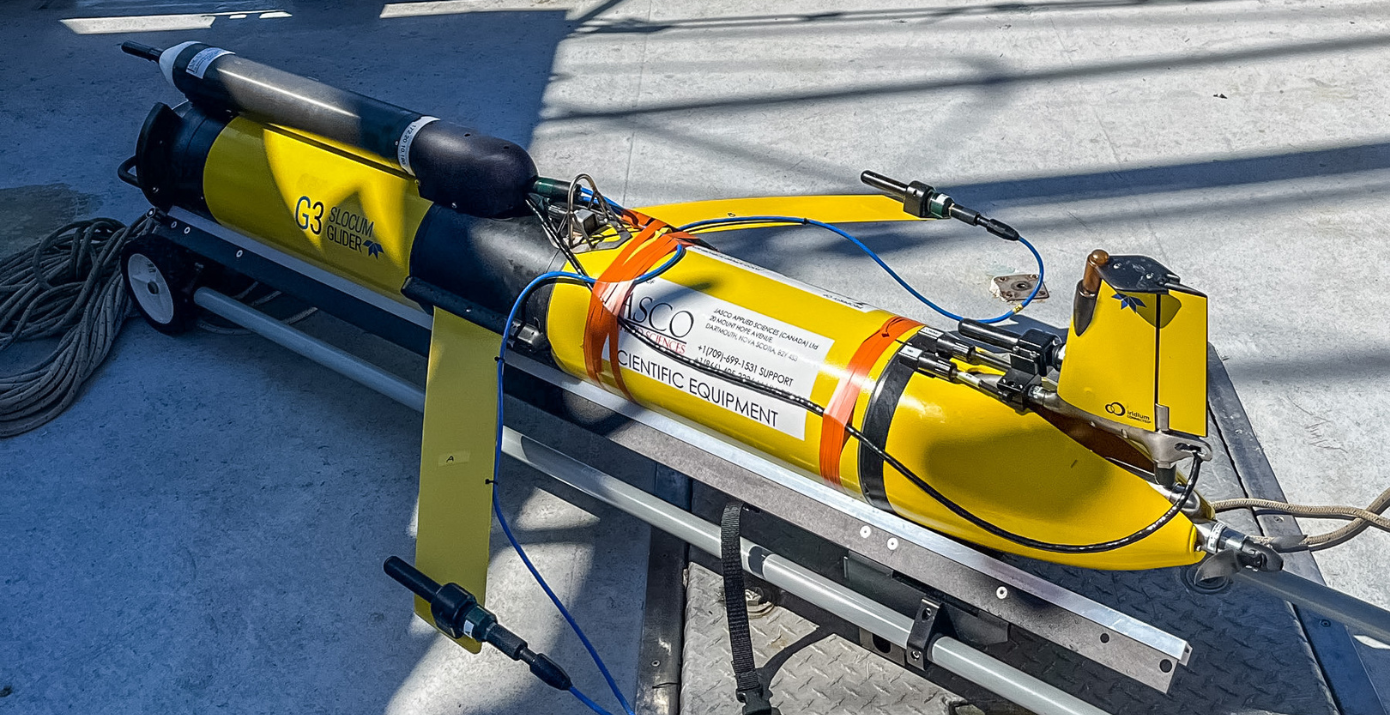
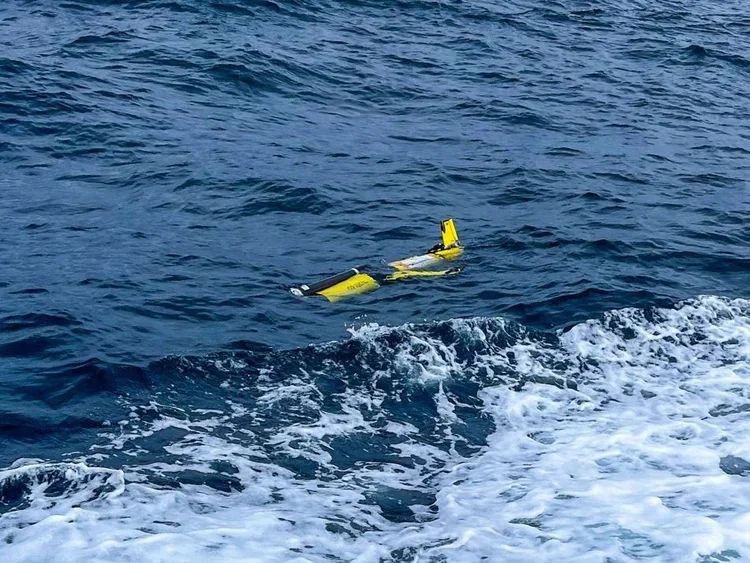
In a recent deployment off the coast of Cape Sable, Nova Scotia, the Department of Fisheries and Oceans (DFO) and JASCO Applied Sciences (JASCO), successfully demonstrated the ability to detect and localize marine mammals using a fleet of Slocum autonomous underwater gliders.
The gliders were deployed in Roseway Basin on the Scotian Shelf, a region recognized as a critical habitat for endangered and at-risk marine mammals. Two DFO gliders and one JASCO glider were equipped with JASCO’s OceanObserver™ directional Passive Acoustic Monitoring (PAM) system.
The OceanObserver™ system on each glider detected a fixed sound source and marine mammal vocalizations and estimated the bearing (direction) of those sounds. The real-time directional detections were used to estimate the location of a sound-source during a four-day experiment aimed at empirically measuring detection and localization performance.
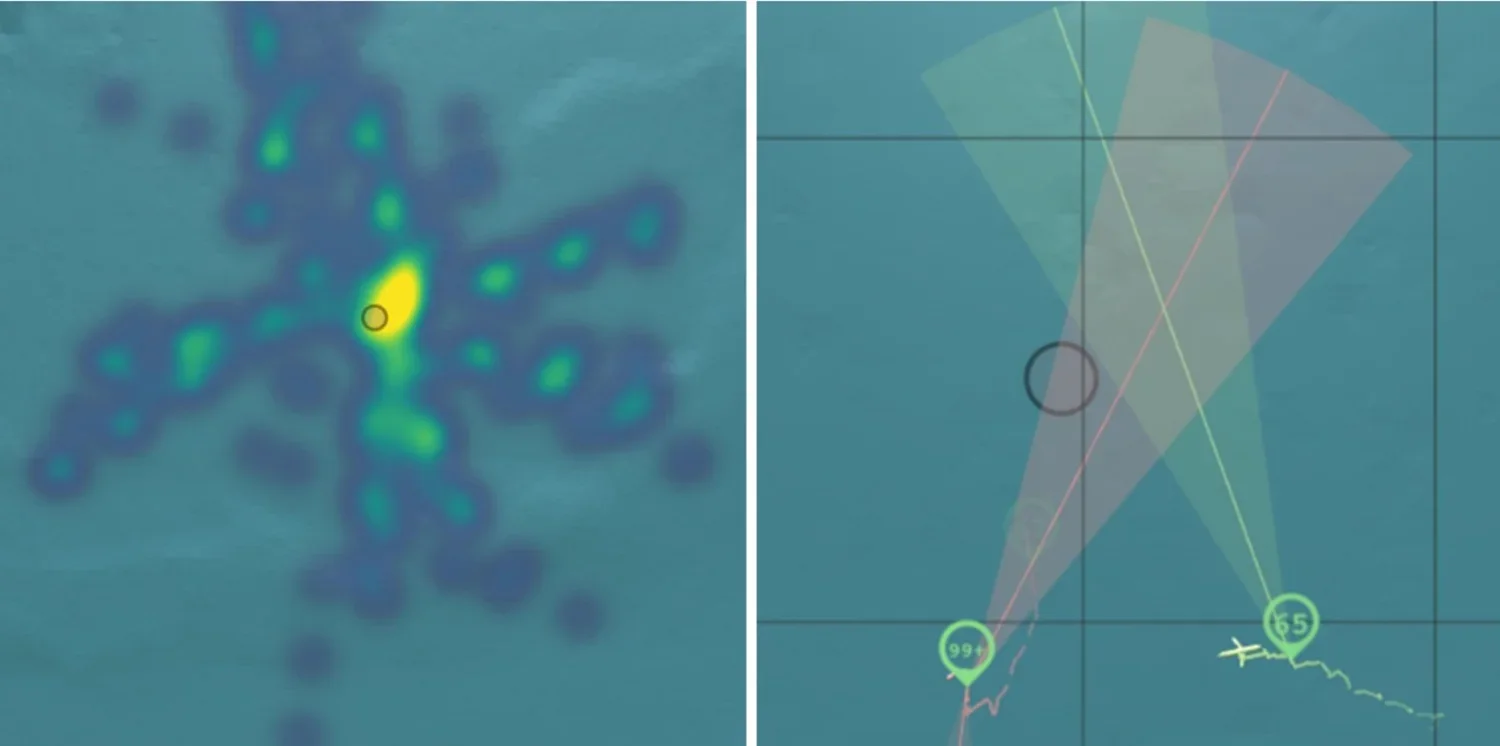
Heat map and cross fixes showing the real-time estimated position of the sound source. Actual position is indicated by the black circle.
Upon completing the structured experiment, the three gliders embarked on an extended mission to monitor marine mammals in Roseway Basin. Throughout this deployment, multiple detections of Fin, Sei, Blue, and North Atlantic Right Whales occurred. DFO and JASCO personnel were provided an intuitive geo-spatial visualization of glider tracks, bathymetry, collected data, target detections, bearing estimates, and heatmaps of localizations via Blue Ocean Marine Tech Systems SeaSuite™. The detections and tracks from all three gliders were also available on Whale Insight.
The structured experiment was conducted as part of an Innovative Solutions Canada (ISC) project funded by Defence Research and Development Canada (DRDC). DFO and JASCO were assisted by staff from Coastal Environmental Observation Technology Research (CEOTR) centre, Dalhousie University, and Blue Ocean Marine Tech Systems (BOMTS) in the execution of this work. The extended marine mammal monitoring mission was conducted under DFO Science’s Whale Acoustic Slocum Program (WASP).
The Roseway Basin deployment coincided with the deployment of three Slocum gliders near Troia, Portugal, as part of NATO’s REPMUS 24’ exercise. During REPMUS, the same OceanObserver™ systems detected underwater targets in anti-submarine warfare barrier experiment. These two deployments effectively demonstrate the potential dual-use capabilities of Slocum gliders equipped with OceanObserver directional passive acoustic monitoring (PAM) systems.
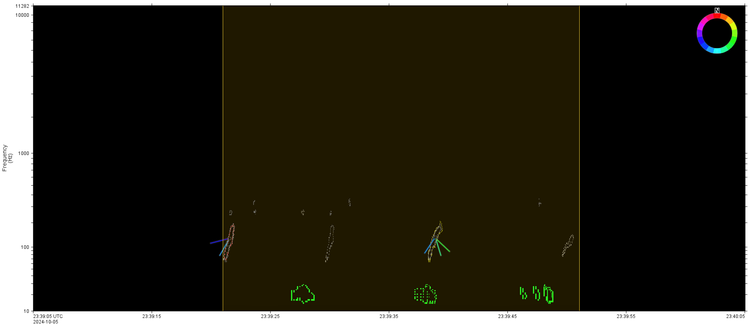
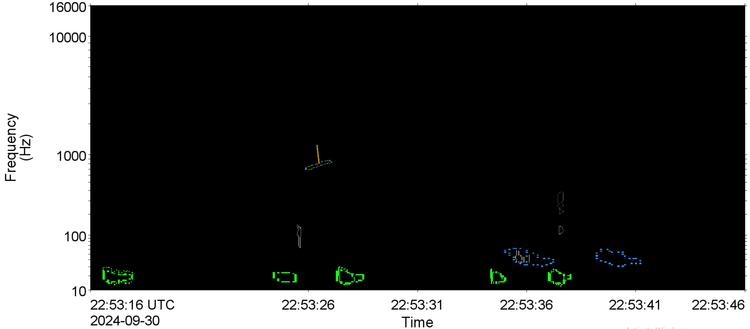
Near-real-time directional detections of North Atlantic Right, Fin, and Sei Whales are shown above.
About JASCO Applied Sciences
JASCO Applied Sciences is a world leader in the science of underwater sound and its effects on marine life. A global company founded in Victoria, Canada, in 1981, JASCO provides services from offices in Canada, the United States, the United Kingdom, the Netherlands, Germany, and Australia. We provide support for all stages of environmental reviews and assessments of underwater sound for the renewable energy, oil and gas, marine construction, shipping, and defence sectors. We design, develop, and manufacture state-of-the-art oceanographic data acquisition systems to meet project demands for quality, endurance, reliability, and performance. We enable our clients to satisfy regulatory requirements by providing scientifically defensible assessments of their projects to government regulators and the public. For more information, visit: www.jasco.com.