

Regulatory Consultancy
Assessment services for all phases
Assessing underwater noise emissions and the effect of noise on marine wildlife are often important environmental requirements for regulatory approvals of offshore and nearshore energy projects. JASCO has performed specialized underwater and airborne noise science for over 40 years, and have performed environmental assessments pertaining to underwater noise for over 25 years. By providing noise assessment frameworks and regulatory liaison, we support our clients throughout the approval process.
Noise assessment services that span the planning, installation, and operation phases of:
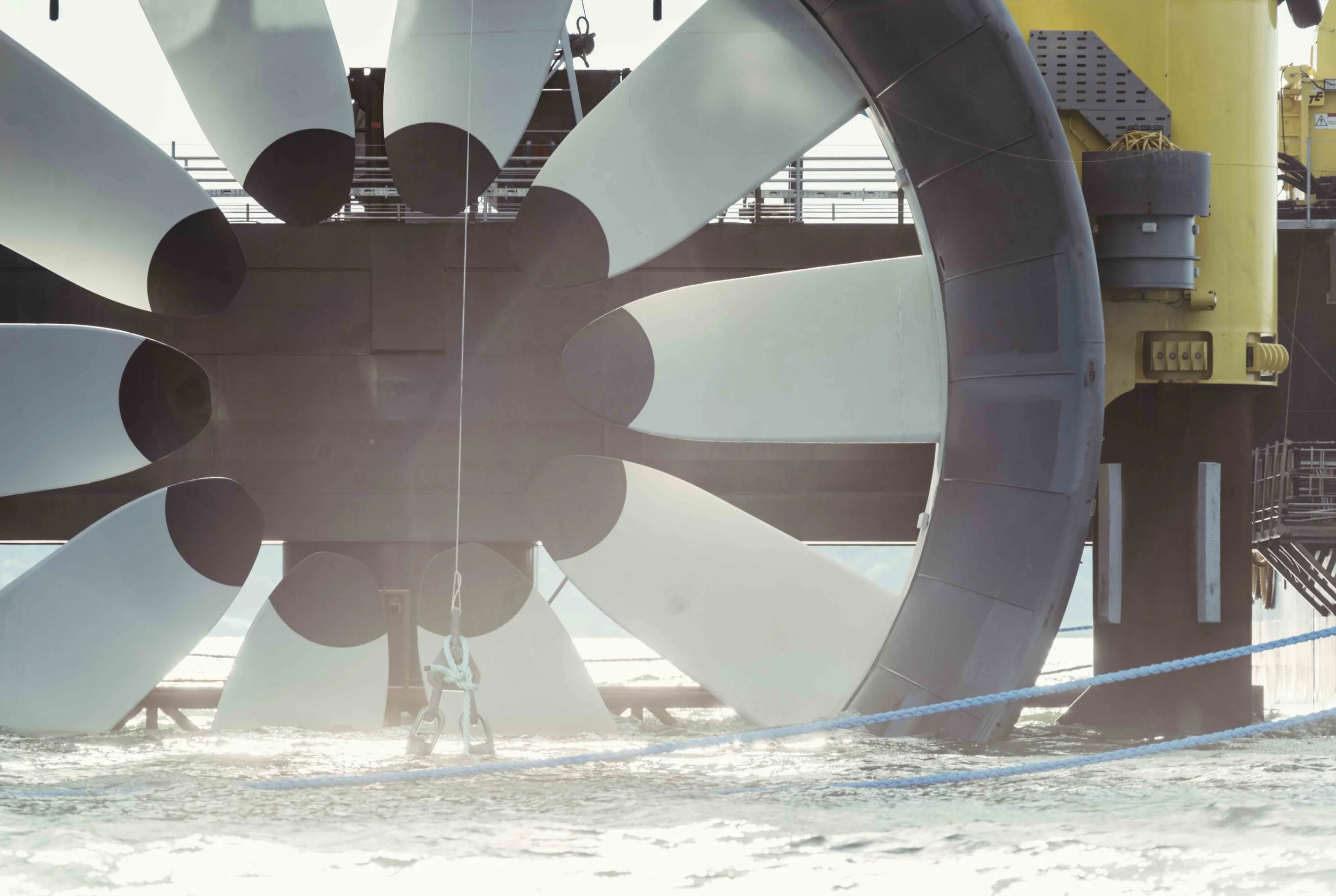
In-stream tidal turbines
Wave energy devices
Undersea cable installations

Preventing “over-regulation”
Underwater acoustic science is complex and multifaceted. JASCO works with governments and regulators to ensure appropriate and consistent regulatory guidelines are applied to energy projects.
Objective, scientifically defensible assessments
We enable our clients to satisfy regulatory requirements by providing scientifically defensible assessments of their projects. We present our assessments directly to regulators and ensure that noise regulations are applied correctly to our clients’ projects. We regularly perform public presentations of acoustic data and adjust the level of presentation detail to match the topics of interest and the technical background of the given audience.
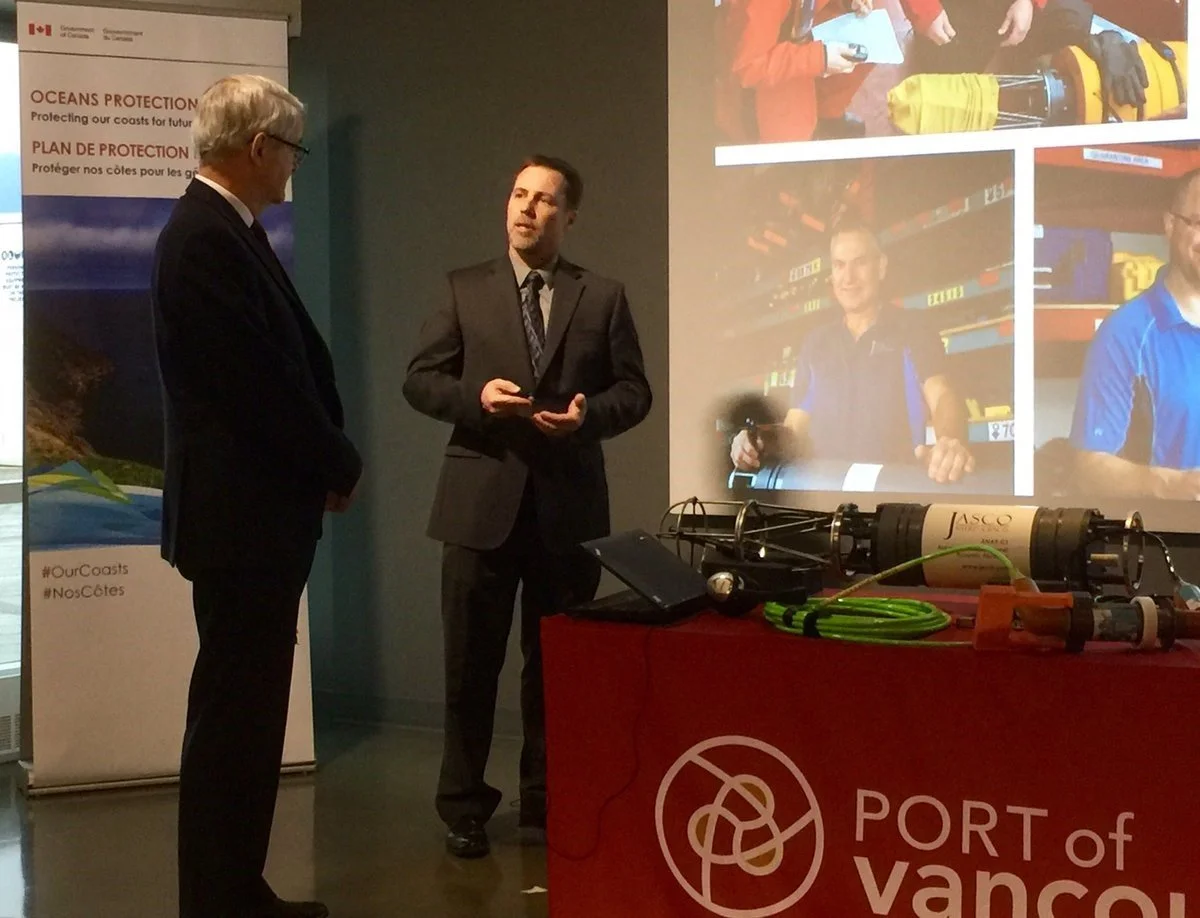
Marc Garneau, then Canadian Minister of Transport, and JASCO’s Chief Science Officer David Hannay.
Learn more
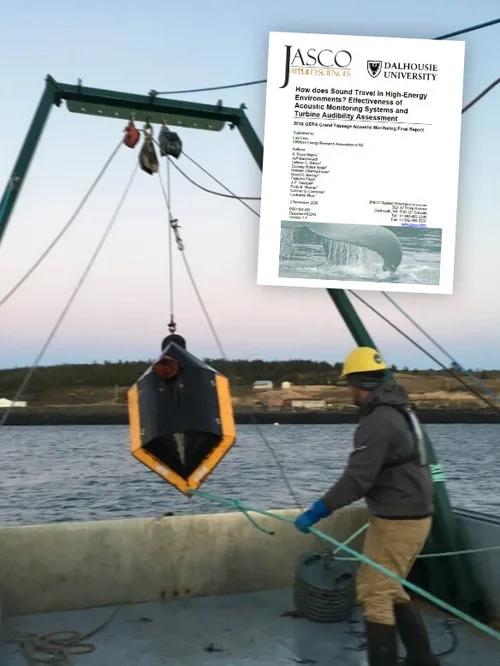
Turbine Audibility Assessment and How Sound Travels in High-Energy Environments
November 2020 — Nova Scotia, Canada
Client: Offshore Energy Research Association of NS
A monitoring and analysis program to advance our ability to perform and interpret passive acoustic monitoring for Environmental Effects Monitoring Plans (EEMPs) for marine tidal turbines. This study answers fundamental research questions that are not addressed by project specific EEMPs, including acoustic propagation effects and turbine audibility in environments with high tidal currents. Monitoring spanned a full 28-day tidal cycle and included an acoustic projector to study high-frequency propagation loss.
A collaboration with Dalhousie University.
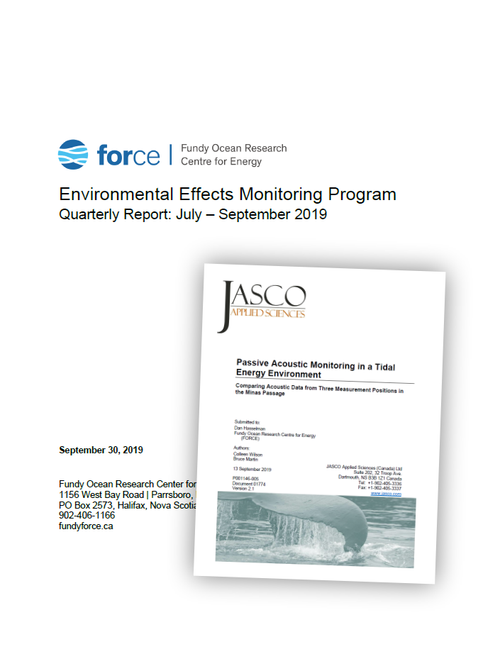
Monitoring of Tidal Energy Platforms in Minas Passage
2018-2019 — Nova Scotia, Canada
Clients: Fundy Ocean Research Centre for Energy (FORCE), Cape Sharp Tidal
2018: Acoustic Analysis of OpenHydro Open-Centre Turbine at FORCE
Measurement and analysis studies for the Fundy Ocean Research Centre for Energy and Cape Sharp Tidal in support of Environmental Effects Monitoring Plans required under their Environmental Assessment Approval. In 2018 JASCO conducted a challenging measurement study of underwater noise from the OpenHydro in-stream tidal turbine demonstration project in Minas Passage, home of the world’s highest tides. The results show that at most frequencies the turbine had a lower source level than vessels typical of the area. The 2019 study compares the noise levels at different measurement locations and further analyzes how the turbine contributed to the soundscape.
December 2018 — Nova Scotia, Canada
Client: Offshore Energy Research Association of NS
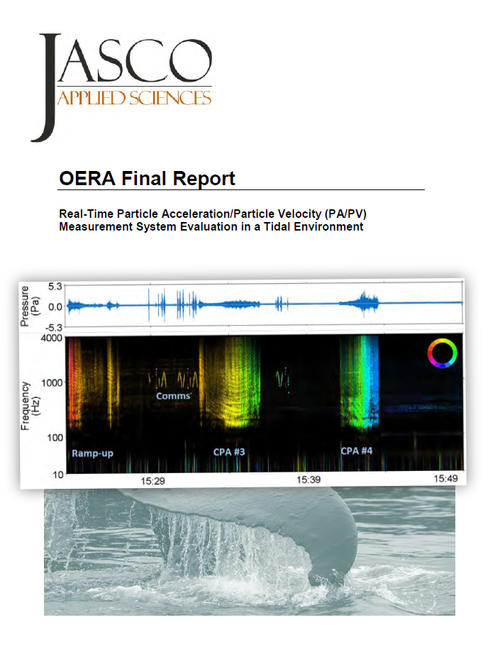
This project successfully tested and trialed a real-time drifting acoustic measurement system using a directional hydrophone sensor. The performance of the PV/PA compared favourably with a traditional hydrophone drifter but added the capability to discriminate the arrival direction of the received sounds.
Assessment of Underwater Noise Generated by Wave Energy Devices
December 2009 — Oregon, United States
Client: Oregon Wave Energy Trust
A review study to: (1) provide a concise knowledge base of expected underwater noise conditions near the Oregon coast where wave energy projects could be developed, and (2) describe noise measurement methodologies suitable for effective regulatory assessment of potential acoustic impacts. Intended as a reference for wave energy developers to use when selecting approaches to underwater noise measurement that would be acceptable to regulatory bodies, consistent with the state of the industry, and cost effective to implement.