
News
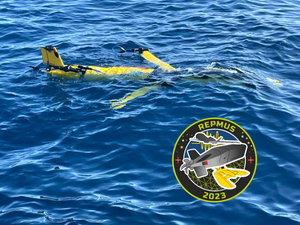
Real-time Monitoring capabilities demonstrated in support of Rapid Environmental Assessment (REA) and Anti-Submarine Warfare (ASW) operations during NATO Exercise REP(MUS) 23’
JASCO’s OceanObserver™ real-time monitoring system was deployed aboard a Slocum Glider in the world’s largest military exercise dedicated to the exploration and testing of maritime unmanned systems.

JASCO announces new Engineering Manager and Customer Support Specialist
JASCO Applied Sciences (JASCO), is proud to announce the appointment of our new Engineering Manager and Customer Support Specialist.
OCEANOISE issues a call to action on World Ocean Day
Several scientists from JASCO Applied Sciences participated in late May in the third edition of the OCEANOISE conference series. On the closing day of the conference, sessions chairs engaged with the audience in a plenary panel discussion. The outcome was a consensus on the need to issue an urgent call to action for the global implementation of effective technologies and regulations aimed at reducing human produced noise in the oceans. It was agreed that such a statement would be published on World Ocean Day.
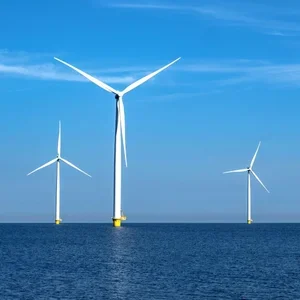
Real-time Passive Acoustic Monitoring for aggregations of spawning cod at South Fork Wind Project
Ørsted and Eversource Energy partner with JASCO Applied Sciences and Rutgers Center for Ocean Observing Leadership to develop a near real-time monitoring solution for Atlantic cod, during the construction of the South Fork Wind Project.

JASCO celebrates Earth Day 2023
To celebrate Earth Day 2023, JASCO offices around the world organized events to give back to their communities and invest in our planet.
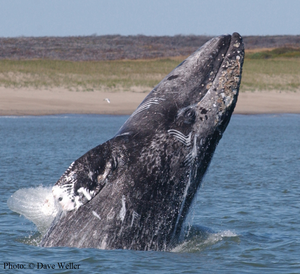
A landmark publication in the research on western grey whales and seismic survey noise
A landmark Topical Collection on Western Gray Whales and Industry Seismic Operations of 10 peer-reviewed original articles has been published in the journal Environmental Monitoring and Assessment. This comprehensive collection arises from decades of studies of the effects of offshore oil and gas development on the grey whales that gather every summer off Sakhalin Island, Russia. JASCO scientists were involved since 2004 in the underwater acoustics field work and analyses that fed into these papers, in addition to contributing to the yearslong real-time mitigation effort that ensured whales would not be exposed to excessive sound emissions from offshore activities and airguns.
DW-ShipConsult joins the JASCO group
Two leading players in the sector of shipping noise mitigation have formally joined forces as DW-ShipConsult GmbH becomes a fully owned affiliate of JASCO Applied Sciences (Deutschland) GmbH. The announcement was made by the respective Managing Directors, Thomas Büchler and Roberto Racca, after the acquisition agreement was signed in Berlin on May 2.
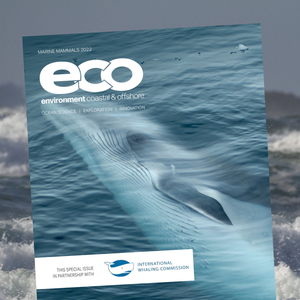
Doing Business on Mighty Waters - Uncrewed
In their article titled Doing Business on Mighty Waters - Uncrewed published in the Marine Mammals special issue of ECO Magazine,JASCO Applied Sciences’ John Moloney and Open Ocean Robotics’ Julie Angus discuss the ‘Marine Mammal Monitoring Service via Uncrewed Surface Vessel’ project, sponsored by Defence Research and Development Canada (DRDC) for the Innovations Solutions Canada program.
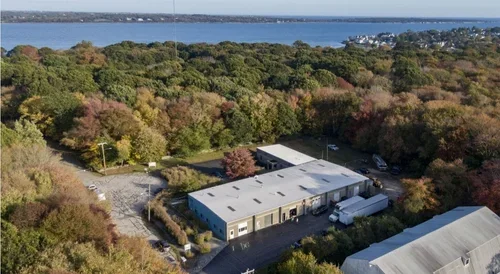
JASCO to open a Marine Acoustic Services Facility in Rhode Island
JASCO Applied Sciences secures a new facility in Rhode Island to support its US operations. The 3000 square-foot facility is located at 165 Dean Knauss Drive, Narragansett, just in behind the University of Rhode Island’s Bay Campus. Initially consisting of two 1500 square foot bays providing office and lab space along with a marine acoustics services and autonomous vehicles support facility, the new location will open in April 2022.
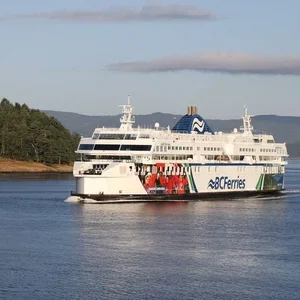
BC Ferries Case Study: Lessons Learned in Setting Underwater Radiated Noise Targets
As described in a recent article in MarineLink, BC Ferries has some key findings to pass along to other vessel operators considering the implementation of underwater radiated noise targets. Important lessons were learned during investigations of how they might reduce the noise from their passenger ferries transiting the Salish Sea, which is home to the endangered southern resident killer whales (SRKWs).
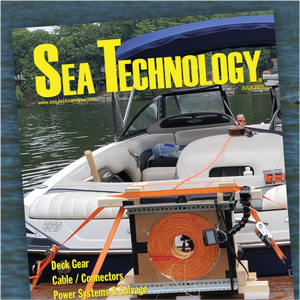
Protecting Killer Whales in Salish Sea
In a feature article titled Protecting Killer Whales in Salish Sea – Cabled Underwater Listening Station Monitors Ship Noise in the July issue of Sea Technology Magazine, JASCO Applied Sciences’ Nicole Chorney, Jack Hennessey, and David Hannay describe an advanced multi-sensor underwater observatory deployed off British Columbia’s south coast that keeps watch on noise from passing ships and has the ability to track endangered Southern Resident killer whales.
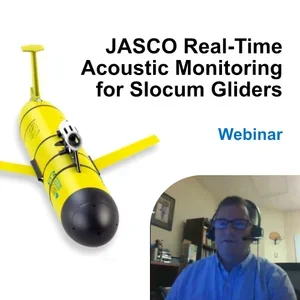
John Moloney hosts Teledyne Webinar: Acoustic Monitoring for Slocum Gliders
John Moloney is host to a Teledyne Webb Research webinar that describes the unique capabilities of JASCO’s OceanObserver acoustic and oceanographic data acquisition and processing system aboard the Teledyne Slocum Glider, as demonstrated in a successful mission to Canada's Gulf of St. Lawrence in 2018 in search of critically endangered North Atlantic right whales.
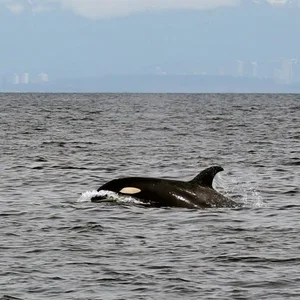
Boundary Pass ULS marks 1-year anniversary and 7500 vessel noise measurements
June 10, 2021, marks the first full year of operation of the Boundary Pass Underwater Listening Station. Over this period, the cabled listening station has provided highly accurate measurements of the underwater noise from more than 4500 unique commercial vessels on over 7500 transits.
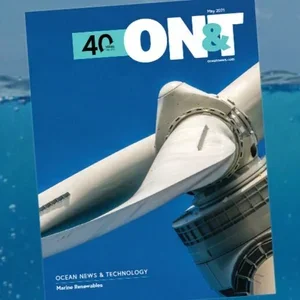
By Air and by Sea
In the May issue of Ocean News & Technology, JASCO’s Chief Communications Officer Roberto Racca gives a panoramic on new mobile platforms apt to be equipped with acoustic monitoring instruments to both detect the presence of vocalizing marine animals and assess their exposure to noise from construction and operation of offshore wind farms.
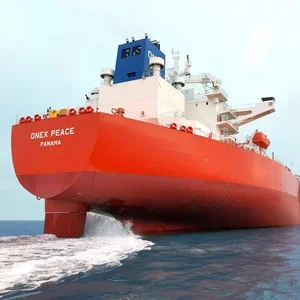
Vessel receives first quiet ship recognition
A merchant vessel has received the first ever underwater environmental noise emissions notation from an international vessel certification organization. The newly built Onex Peace, an Aframax class crude oil tanker built by Hyundai Samho Heavy Industries and delivered to Onex, received DNV’s first SILENT-E notation on its class registration, making it the world’s first commercial vessel to receive this type of notation. The notation is part of a larger effort to encourage ship owners and builders to lower the ecological footprint of their vessels.
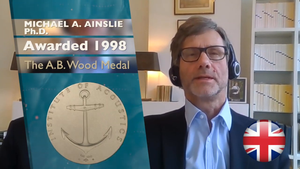
Video retrospective celebrates 50 years of the A B Wood medal
A video production featuring thoughts and recollections from some of the preeminent scientists of the past half century in the field of underwater acoustics has been published by the Institute of Acoustics and the UK Acoustics Network to celebrate the 50th anniversary of the A B Wood medal. The medal with attendant prize is awarded in alternate years to acousticians based in the UK/Europe (even years) and in the USA/Canada (odd years). One of the 24 medal winners featured in the video is Dr. Michael Ainslie, a senior scientist with JASCO Applied Sciences based in the Netherlands.

Bruce Martin hosts OERA Webinar: How Does Sound Travel in High Energy Environments?
On December 10, 2020 Dr. Bruce Martin hosted a webinar titled “How Does Sound Travel in High Energy Environments? Effectiveness of Acoustic Monitoring Systems and Turbine Audibility Assessment”.
To support tidal energy development in the Bay of Fundy, researchers are designing and implementing a long-term acoustic monitoring program. In preparation, specialized acoustic instrumentation was deployed for two months in Grand Passage to better understand how the turbulent waters affect our ability to detect marine mammals, and to what extent these animals can detect a tidal turbine.
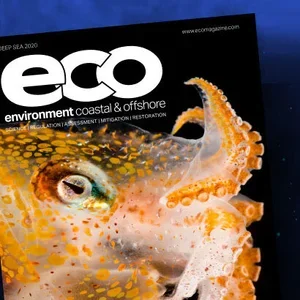
Hearing in the Dark
Roberto Racca and Klaus Lucke of JASCO Applied Sciences dive into the soundscape of the abyss in ECO Magazine’s Deep Sea special issue:
Life in the depths is adapted to wholly different conditions than exist near the surface, with increasingly high static pressure and decreasing or no light. Here, animals create their own light through bioluminescence. What of their hearing abilities? To understand how deep-sea animals perceive their environment, a group of Australian experts joined an international research expedition in the Indian Ocean. The question was whether deep-sea fish have a keener sense of hearing compared to their shallow-water counterparts.
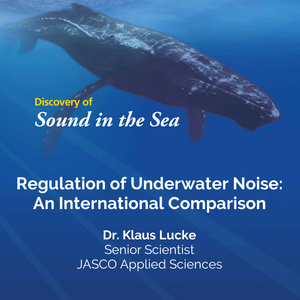
Klaus Lucke's DOSITS webinar shines light on underwater noise regulations around the globe
JASCO scientist Dr. Klaus Lucke hosted an informative webinar titled Regulatory Approaches to Underwater Noise – An International Comparison. He provides an overview of the most prominent national and international noise regulations. Focussing entirely on marine mammals, parallels and differences in approaches taken by countries, regional agreements, and multinational organisations are presented.
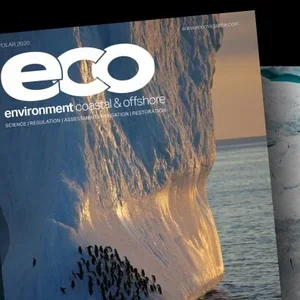
Listening to the Chukchi Sea
In the recent Polar special issue of ECO Magazine, JASCO’s Roberto Racca and David Hannay describe how an ambitious acoustic monitoring program helped advance our understanding of Arctic ecology:
From 2006 to 2015, several oil and gas companies performed exploratory campaigns … in the northeastern Chukchi Sea. Some of these companies funded multidisciplinary long-term environmental projects to collect ecological baseline measurements and inform regulatory permit applications. The Chukchi Sea Environmental Studies Program (CSESP), the largest of these multi-year studies, included a large passive acoustic monitoring component. Led by JASCO Applied Sciences, the acoustic element of the program enabled scientists to describe how vocal marine mammals use the northeastern Chukchi Sea throughout the seasons, and to characterize the natural and human-made soundscape of the area.